
About the studio
The name, and the person behind it.
The homepage is written in the studio's own register, which is to say with a straight face and a joke in the middle of it. This page is the plainer version: where the name came from, and who is doing the building.
The name
Why Tacomancy.
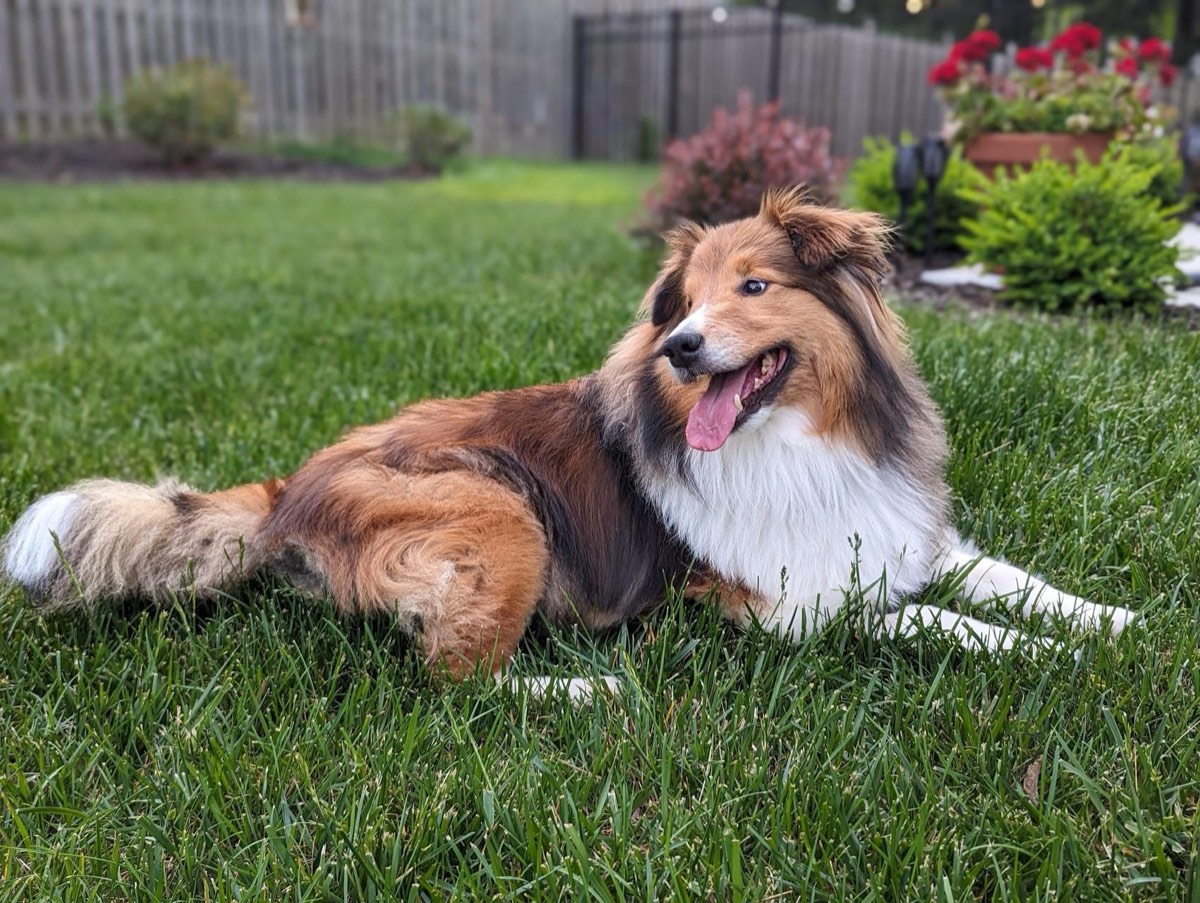
Tacomancy was a dog before it was a studio. My partner and I had a dog named Taco. We are the kind of household that plays D&D and takes it seriously, so it was inevitable that Taco would end up with a character class: a necromancer commands the dead and a geomancer commands the earth, and Taco, obviously, was a tacomancer, a practitioner of taco-based magic. The title stuck. He answered to it with the dignity of a dog who suspects he is being made fun of and has decided it is beneath him to mind.
Taco died in the summer of 2026. When the studio needed a name a little while later, there was only ever one candidate. Everything it makes is made under his title, and the homepage keeps his joke going with a straight face, which is how he would have wanted it.
The name also happens to be a good one for the work. A -mancy is a practice of divination: look carefully at something ordinary, follow a fixed procedure, and commit to a reading before you know whether it is right. Strip away the mysticism and that is a hypothesis, a pinned prototype, an architecture decision written down so the future can disagree with it in public. The studio's projects are attempts to make that habit cheap enough to keep. And the taco half keeps it honest: the least pretentious thing that still has a structure, in service of lunch rather than the other way round. The tenets on the homepage are jokes, but every one of them is also a constraint the projects are held to.
The person
Sarah Lehman.
Sarah M. Lehman is a research scientist working on the testing, verification, and safety assurance of machine-learning systems. They are a Senior AI Research Scientist at Slingshot Aerospace, and before that spent four years as a Research Computer Engineer at NASA Langley Research Center, where their work included a report on the proposed uses of large language models to produce or assess safety assurance arguments — a subject on which they describe themself, professionally, as a skeptic. She holds a PhD in Computer Science from Temple University (2022; dissertation on testing challenges in mobile augmented reality systems), an MS in Software Engineering from Penn State, and a BA in Computer Science from Messiah University. Before the doctorate she was a software engineer at Lockheed Martin, and has taught as adjunct faculty at Temple, Villanova, and Messiah, most recently a course of their own design on ethical and explainable AI.
Tacomancy is the studio for the work that does not belong to an employer. Vitrine is a local-first research workspace whose primary object is the question rather than the note; its design is complete and pinned, and the app is in development. Skills is the studio's working practice — guidance tiers, pinned prototypes, decision records, reversibility ranking, and the pipeline that chains them — made installable in any repository. Both are built in the open, with the decisions recorded as they are made, which is what a career spent asking whether software does what it claims will do to a person.
They live in Philadelphia. LinkedIn · GitHub · the studio's repositories